
What Tennessee Law Actually Requires
You're getting your first policy in Tennessee and the quote form asks you to pick liability limits. The cheapest option is $25,000/$50,000/$25,000, and it's labeled as meeting state minimums. You select it, thinking you're covered because it's legal.
Tennessee law requires every driver to carry liability insurance with at least $25,000 per person for bodily injury, $50,000 per accident for bodily injury, and $25,000 for property damage. That's the floor to register a car and avoid a license suspension. But legal compliance and financial protection are not the same thing, and the gap between them is where first-time drivers get hurt.
Compare car insurance for first-time drivers
Rates are high for new drivers — but the right carrier and discounts can make a real difference.
Get Your Free QuoteTennessee Per-Person Injury Minimum
$25,000
Tennessee's $25,000 bodily injury minimum per person is among the lowest in the country. The average injury claim from a car accident costs $57,000, leaving a $32,000 gap that comes out of your pocket if you cause a crash.
Tennessee Code Annotated 55-12-139
What Those Three Numbers Mean in a Real Crash
The $25,000/$50,000/$25,000 format confuses most first-time buyers. Here's what each number actually covers. The first number ($25,000) is the maximum your insurer pays for one person's injuries in an accident you cause. The second number ($50,000) is the total your insurer pays for all injuries in one accident, no matter how many people are hurt. The third number ($25,000) is the maximum your insurer pays for property damage you cause in one accident.
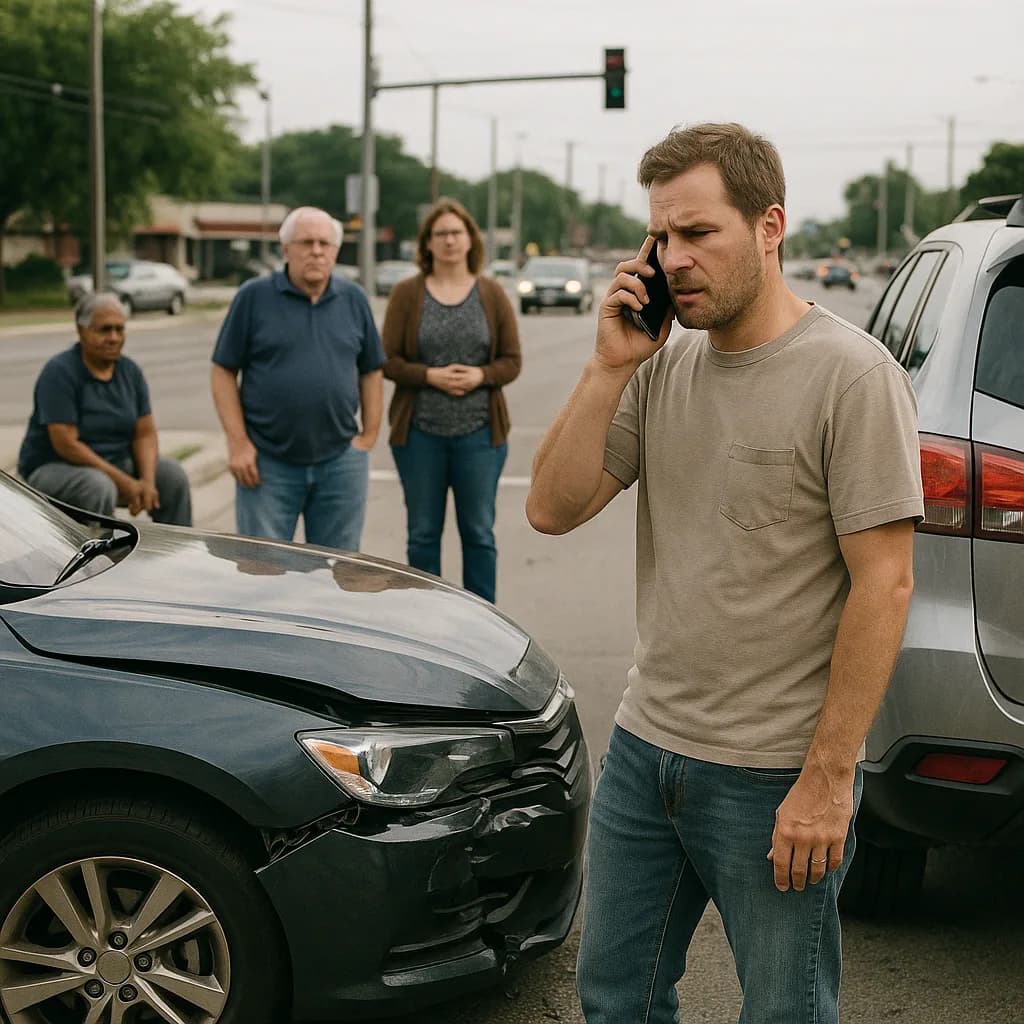
If you rear-end a car at a stoplight and injure the driver, your policy pays up to $25,000 for their medical bills, lost wages, and pain and suffering. If their actual damages are $40,000, you personally owe the remaining $15,000. If you total their car and it's worth $30,000, your policy pays $25,000 and you owe $5,000 out of pocket. The insurer does not cover anything above the limit you purchased.
You are personally liable for every dollar of damage above your liability limits. Tennessee does not cap that liability, and the other driver can sue you for the full amount.
Why the Minimum Almost Never Makes Financial Sense

A moderate rear-end collision that sends one person to the emergency room typically generates $40,000 to $70,000 in medical bills and lost wages. A broken bone, soft tissue injury, or concussion easily exceeds $25,000 in treatment costs before accounting for lost income or pain and suffering. Tennessee's minimum covers less than half of the average injury claim, and you are personally responsible for the difference.
Property damage limits are just as tight. The average new car costs over $48,000, and many SUVs and trucks exceed $60,000. If you total a parked vehicle, your $25,000 property damage limit pays a fraction of the replacement cost. The vehicle owner's insurer pays the rest and then pursues you directly for reimbursement. That debt does not disappear, and it can follow you for years through wage garnishment or liens.
Related Articles

What Adequate Coverage Actually Costs
Raising your liability limits from Tennessee's minimum to $100,000/$300,000/$100,000 typically adds $30 to $60 per month to your premium. That increase feels significant when you're buying your first policy, but it's the difference between financial protection and personal bankruptcy after one at-fault accident.
The $100,000 per-person limit covers the vast majority of single-injury claims without leaving you exposed. The $300,000 per-accident limit protects you when multiple people are hurt. The $100,000 property damage limit covers most vehicles on the road, including new trucks and SUVs. These limits are not excessive; they reflect the actual cost of accidents in 2025.
Some carriers writing in Tennessee offer online quoting and let you adjust limits in real time to see the price difference. State Farm, GEICO, Progressive, and Allstate all operate in Tennessee and provide instant quotes. Compare the premium difference between minimum limits and $100,000/$300,000/$100,000 before defaulting to the cheapest option. The monthly cost difference is almost always smaller than the financial risk you're taking on by staying at the minimum.
Tennessee Uninsured Driver Rate
21.3%
More than one in five drivers in Tennessee has no insurance at all. If an uninsured driver hits you, your own uninsured motorist coverage is the only protection you have for your medical bills and lost wages.
Insurance Information Institute, 2023
Uninsured Motorist Coverage Is Optional But Critical
Tennessee does not require uninsured motorist coverage, but 21.3% of drivers in the state have no insurance. If one of them hits you, their lack of coverage becomes your financial problem. Uninsured motorist coverage pays your medical bills, lost wages, and pain and suffering when the at-fault driver has no insurance or not enough to cover your damages.
Uninsured motorist coverage mirrors your liability limits. If you carry $100,000/$300,000 liability, you can purchase $100,000/$300,000 uninsured motorist coverage. The cost is typically $10 to $25 per month, and it's the only protection you have against the one-in-five chance that the driver who hits you is uninsured. Tennessee law requires insurers to offer this coverage, but you have to actively select it. It does not come automatically with a liability-only policy.
Full Coverage vs. Liability-Only for a First Car
If you financed or leased your first car, the lender requires full coverage, which means liability plus collision and comprehensive. Collision pays to repair or replace your car after an accident you cause. Comprehensive pays for theft, vandalism, weather damage, and hitting an animal. Both coverages come with a deductible, typically $500 or $1,000, which is the amount you pay out of pocket before the insurer pays the rest.
If you own your car outright and it's worth less than $5,000, paying for collision and comprehensive often does not make financial sense. A $3,000 car with a $500 deductible and $80 per month in collision and comprehensive premiums costs you $960 per year to insure a vehicle worth $3,000. If the car is totaled, the insurer pays you $2,500 after the deductible. You've paid nearly a third of the car's value in premiums in one year. For older, lower-value cars, liability-only coverage plus an emergency fund for repairs or replacement is usually the better financial decision.
What to Do Right Now
Get quotes from at least three carriers writing in Tennessee. State Farm, GEICO, Progressive, Allstate, and Nationwide all offer online quoting and write policies for first-time drivers. Enter your information once and request quotes at both the state minimum and at $100,000/$300,000/$100,000 liability limits. Compare the monthly premium difference and decide whether the cost increase is worth the financial protection.
Add uninsured motorist coverage at the same limits as your liability coverage. With more than one in five Tennessee drivers uninsured, this is not optional protection. If you're financing a car, confirm the lender's collision and comprehensive deductible requirements before selecting your coverage. Most lenders cap the deductible at $500 or $1,000. If you own your car outright and it's worth less than $5,000, run the math on whether collision and comprehensive premiums justify the coverage or whether liability-only plus savings makes more sense. Buy the policy that matches your actual financial position, not the one that meets the legal minimum.