What Alabama Legally Requires vs. What Actually Protects You
Your first Alabama quote came back showing the state minimum liability coverage as the cheapest option, and you selected it to keep your premium manageable. The form confirmed you're legal: $25,000 bodily injury per person, $50,000 per accident, $25,000 property damage. You can drive, the state accepts it, and you saved money compared to higher limits.
Here's the structural problem most first-time drivers discover only after a crash: Alabama's minimum liability limits are among the lowest in the country, and they won't cover the costs of even a moderate accident. The average bodily injury claim in the U.S. runs around $57,000. Your $25,000 per-person coverage pays the first $25,000, then stops. The remaining $32,000 comes directly from your assets: your bank account, your wages, your future earnings. You're legal, but you're not protected.
Compare car insurance for first-time drivers
Rates are high for new drivers — but the right carrier and discounts can make a real difference.
Get Your Free QuoteAlabama Per-Person Injury Minimum
$25,000
Alabama requires only $25,000 in bodily injury coverage per person. The average injury claim costs approximately $57,000, leaving a $32,000 gap that you pay personally if you carry only the minimum.
Alabama Code §32-7-6; industry claim data
How Alabama's Liability Limits Actually Work in a Real Crash
Liability coverage pays the other driver's costs when you cause an accident. The per-person limit is the maximum your policy pays for one injured person. The per-accident limit is the maximum your policy pays total, no matter how many people are hurt. Property damage covers the other driver's vehicle and any property you hit.
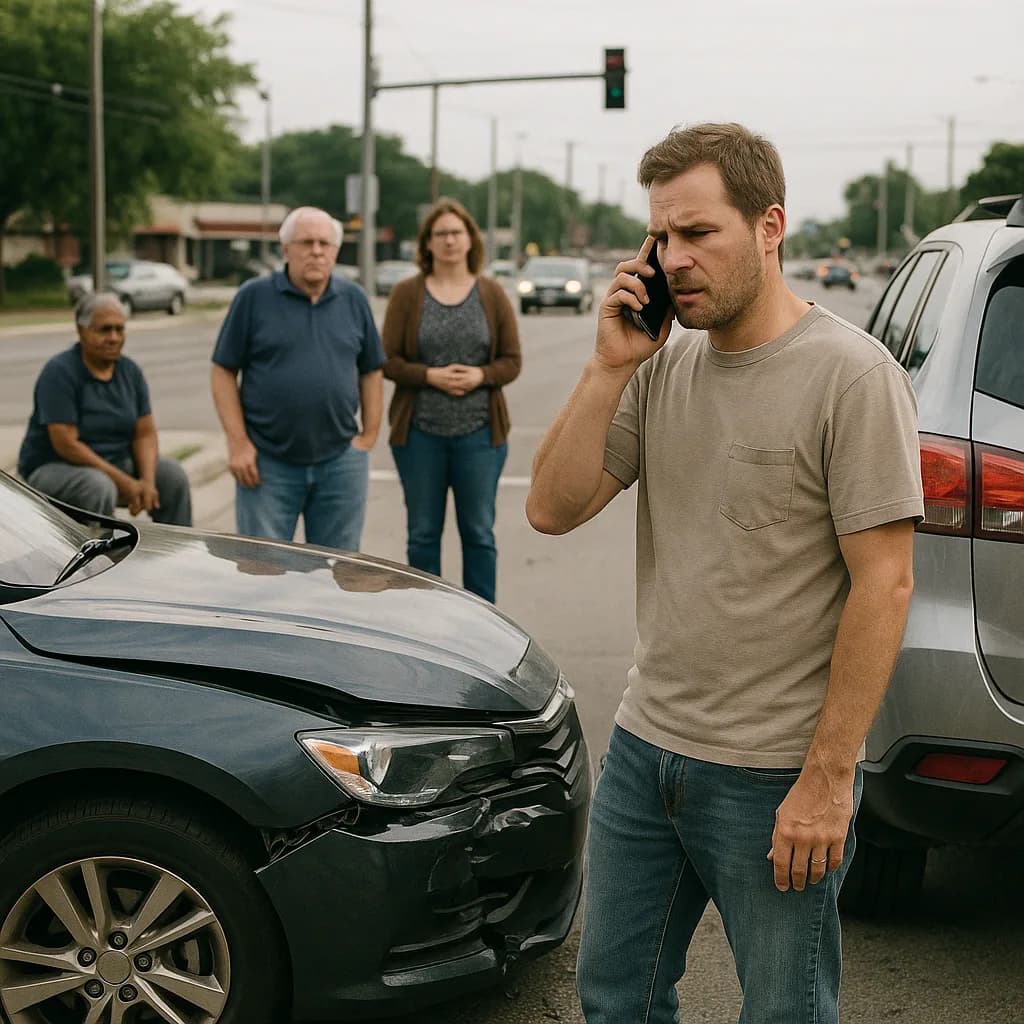
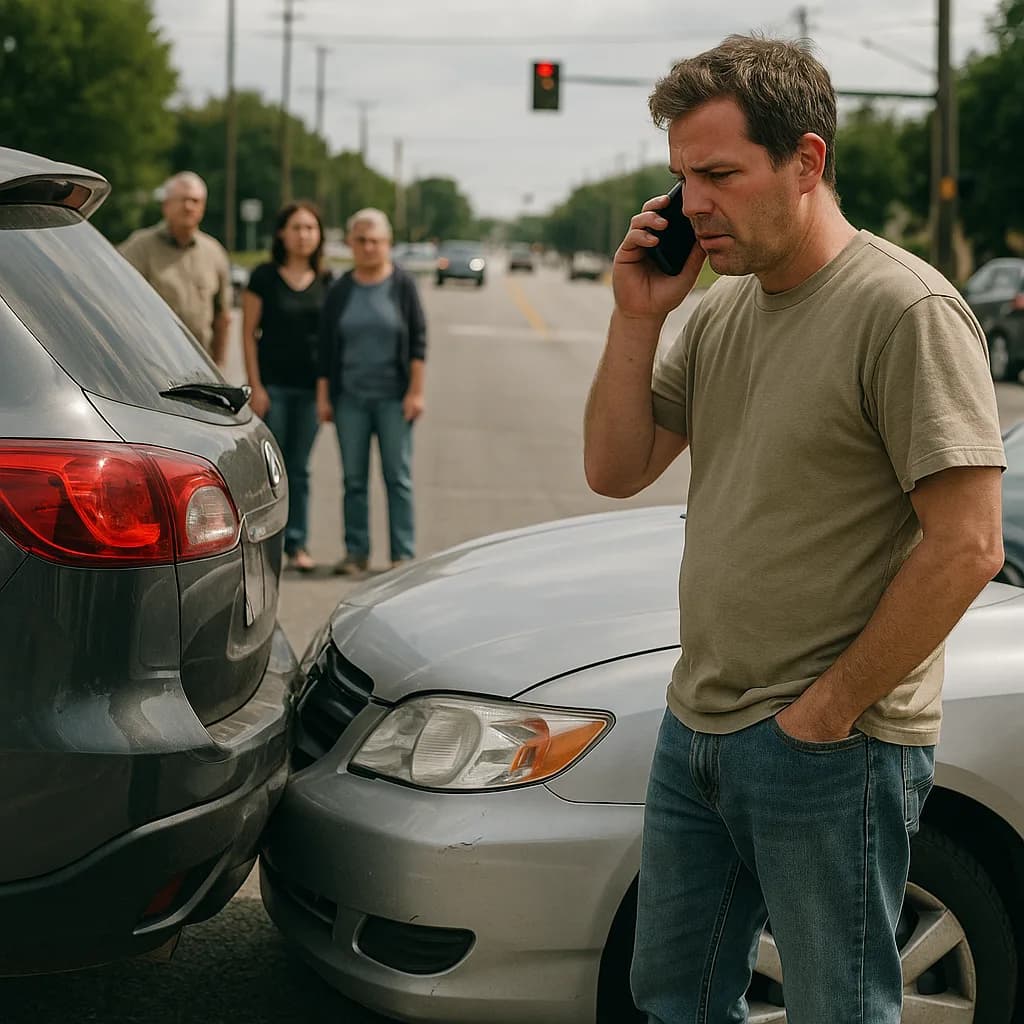
Walk through a common scenario: you cause a two-car accident. The other driver suffers a broken arm and goes to the emergency room. The hospital bill, follow-up visits, physical therapy, and lost wages total $40,000. Your Alabama minimum policy pays $25,000. The injured driver's attorney sends you a demand letter for the remaining $15,000. If you don't pay, they can sue and garnish your wages. Your policy met the state's legal floor, but it didn't cover the actual cost of the harm you caused.
The per-accident limit works the same way but across multiple injured people. If you injure two people in one crash and each has $30,000 in medical costs, your $50,000 per-accident limit pays $50,000 total — $25,000 to each person. You're personally liable for the remaining $10,000 to each, or $20,000 out of pocket. The legal minimum and financial protection are not the same thing.
The blocker: you chose the minimum to save money now, but Alabama's $25,000 per-person limit leaves you personally liable for tens of thousands in a moderate crash — and you won't know the gap exists until after the accident.
What Adequate Liability Coverage Costs for a First Alabama Policy
Most carriers offer liability in increments: 25/50/25 is the state minimum, but you can typically select 50/100/50, 100/300/100, or higher. The 100/300/100 option means $100,000 per person, $300,000 per accident, $100,000 property damage. That level covers the vast majority of accident scenarios without exposing your personal assets. The monthly premium difference between 25/50/25 and 100/300/100 is often $20 to $40 for a first-time driver, depending on your driving record, vehicle, and location.
Compare that cost to the financial exposure: a single moderate injury claim that exceeds your $25,000 limit by $30,000 wipes out years of the premium savings you thought you were getting by choosing the minimum. Adequate liability coverage is the one place in your first policy where paying more upfront prevents catastrophic out-of-pocket costs later. Get quotes at multiple liability levels and see the actual dollar difference before defaulting to the minimum.
Related Articles

Alabama's Other Required and Recommended Coverages
Alabama does not require personal injury protection, uninsured motorist coverage, or comprehensive and collision coverage by law. You can legally drive with liability only. But two optional coverages matter specifically for first-time drivers in Alabama: uninsured motorist and collision.
Uninsured motorist coverage pays your medical bills and lost wages when the at-fault driver has no insurance or insufficient coverage. Alabama's uninsured driver rate is 16.8%, meaning roughly one in six drivers on the road has no coverage. If an uninsured driver hits you and you're injured, your own liability coverage doesn't help — it only pays the other driver's costs when you're at fault. Uninsured motorist coverage fills that gap. It's optional, but it protects you against a high-probability risk in Alabama.
Collision coverage pays to repair or replace your car when you cause an accident or hit an object, regardless of fault. If you financed your car, your lender almost certainly requires it. If you own your car outright, collision is optional. The decision comes down to your car's value and whether you can afford to replace it out of pocket. A $3,000 car with a $500 deductible makes collision a harder sell; a $15,000 financed car makes it mandatory. Check your loan contract for the lender's specific requirements, which often include a deductible cap at $500 or $1,000.
Comprehensive coverage pays for non-collision damage: theft, vandalism, weather, hitting an animal. Alabama's motor vehicle theft rate is 179.9 per 100,000 population, lower than the national average but not zero. Comprehensive is also typically required by lenders and is relatively inexpensive compared to collision. If you're financing, you'll carry both. If you own the car, comprehensive without collision is a common choice for older vehicles still worth protecting against theft or storm damage.
How Alabama Enforces Insurance and What Happens If You Lapse
Alabama requires continuous insurance coverage as long as your vehicle is registered. If your policy lapses — meaning you miss a payment and the carrier cancels, or you cancel without replacing it immediately — your carrier reports the lapse to the Alabama Law Enforcement Agency. ALEA can suspend your registration and your driver license.
The reinstatement process after a lapse requires proof of current insurance and a $100 base reinstatement fee, plus any additional fees depending on the reason for suspension. If the lapse triggers an SR-22 requirement, you'll also need to maintain SR-22 insurance for three years. An SR-22 is a certificate your carrier files with the state proving you carry at least the minimum liability coverage. Carriers charge a filing fee, and your premium goes up because you're now classified as high-risk.
For a first-time driver, a lapse on your record follows you. Every future quote will ask whether you've had continuous coverage, and a lapse signals higher risk to carriers. Rates go up, and some carriers won't quote you at all. The money you save by letting a policy lapse is almost always erased by the higher premiums and fees you pay for years afterward. If you're struggling with the cost, call your carrier and ask about payment plans or coverage adjustments before you let the policy cancel.
Carriers Writing Alabama Policies
25
At least 25 carriers write auto insurance in Alabama, including standard-tier options like State Farm, Geico, and Progressive, and non-standard carriers like Dairyland and The General that specialize in high-risk drivers. Compare quotes from multiple carriers; first-time driver pricing varies widely.
Carrier licensing data
How to Compare Carriers on Coverage and Cost
Get quotes from at least three carriers, and make sure you're comparing the same liability limits across all quotes. A $90/month quote at 25/50/25 is not cheaper than a $110/month quote at 100/300/100 — the second quote gives you four times the per-person coverage for $20 more. Write down the liability limits, deductibles, and any optional coverages included in each quote so you can compare apples to apples.
Ask each carrier whether they offer a telematics program. Telematics tracks your driving through a phone app or plug-in device and can lower your premium if you drive safely. Programs like Progressive's Snapshot, State Farm's Drive Safe & Save, and Geico's DriveEasy are common. The discount varies, but it's one of the few ways a first-time driver with no claims history can prove they're low-risk and earn a rate reduction within the first policy term.
Get Quotes at Higher Liability Limits and See the Real Cost
Start by getting quotes at Alabama's minimum 25/50/25 liability, then request quotes at 50/100/50 and 100/300/100 from the same carriers. The difference in monthly premium is the actual cost of adequate protection, not a guess. Once you see the real numbers, you can decide whether the $20 to $40 per month is worth avoiding tens of thousands in personal liability after a crash. Most first-time drivers who run the comparison choose higher limits once they understand the gap.