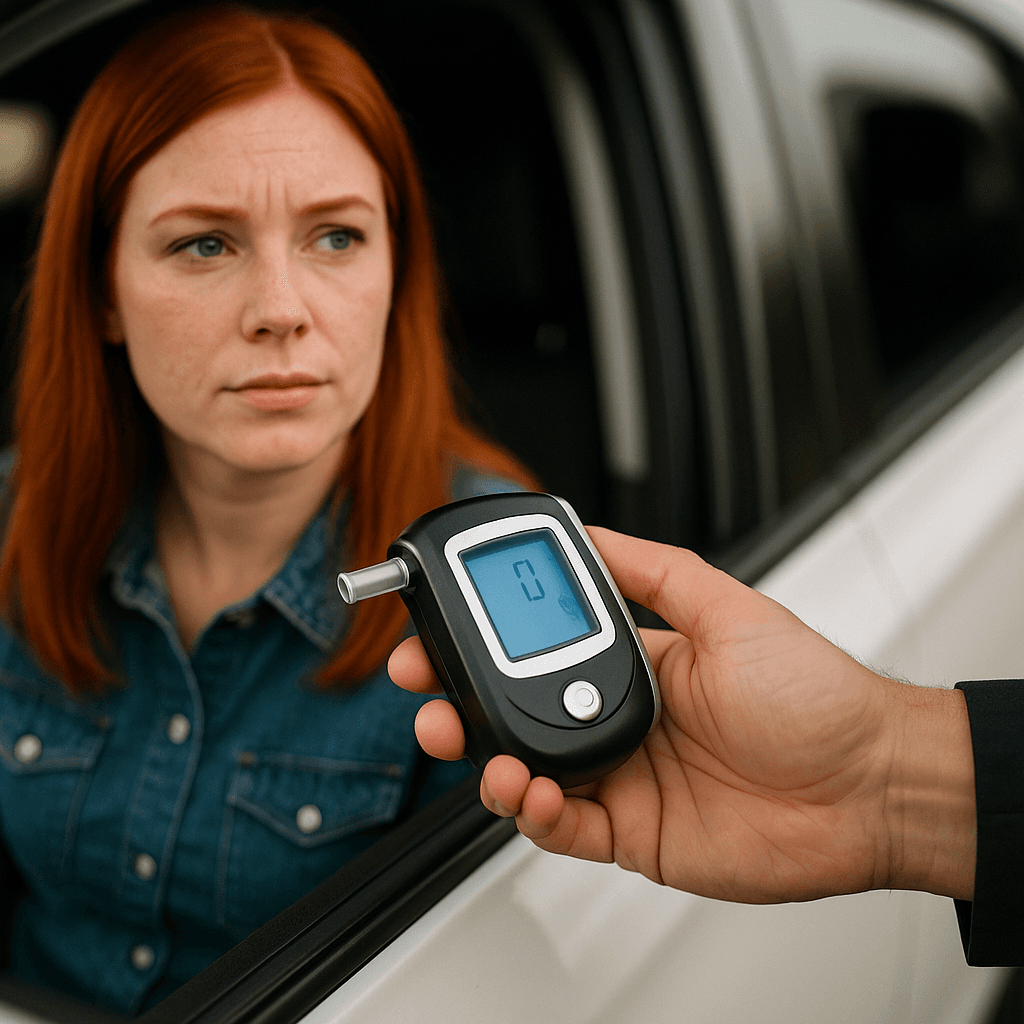
You just got your first speeding ticket in Ohio at 18. Here's exactly how many points hit your license, how long they stay, and what your insurance rate does next.
How many points does a speeding ticket add to your Ohio license at 18?
A speeding ticket in Ohio adds 2 points to your driving record regardless of how fast you were going over the limit. Ohio uses a flat 2-point penalty for all speeding violations — whether you were cited for 5 mph over or 25 mph over, the point value stays the same.
The Ohio Bureau of Motor Vehicles (BMV) keeps those 2 points on your record for exactly 2 years from the conviction date, not the citation date. If you were ticketed on January 15 but convicted on March 1, the 2-year clock starts March 1.
For an 18-year-old driver, those 2 points matter more than for older drivers because you're closer to the 12-point suspension threshold. Ohio suspends your license when you accumulate 12 points in a 2-year period. A single speeding ticket puts you at 2 of 12 — but a second violation within 2 years pushes you to 4 points, and the accumulation risk becomes real.
What your insurance rate does after your first speeding ticket in Ohio
Your insurance rate will increase an average of 20-30% after your first speeding ticket in Ohio if you're 18 years old. That percentage compounds on top of the already-elevated base rate young drivers pay — so a $200/month premium becomes $240-260/month for the next 3 years.
Carriers don't charge you for the BMV points directly. They charge you for the violation itself, which they classify as a moving violation surcharge. The surcharge stays on your insurance record for 3 years from the conviction date at most major carriers — even though the BMV removes the points after 2 years. This creates a 1-year gap where your driving record is clean with the state but still surcharged by your insurer.
The rate increase hits at your next policy renewal after the conviction appears on your motor vehicle report (MVR). Most carriers pull MVRs at renewal, not continuously. If your ticket was convicted 2 months before your renewal date, you'll see the increase then. If it was convicted 1 week after renewal, you typically have until the next renewal cycle — giving you up to 6 months before the surcharge applies, depending on your policy term.
Compare car insurance for first-time drivers
Rates are high for new drivers — but the right carrier and discounts can make a real difference.
Get Your Free Quote✓ New Driver Specialists✓ No Obligation✓ Licensed Carriers✓ All 50 States
Why carriers surcharge young drivers more aggressively for the same ticket
An 18-year-old in Ohio pays a higher percentage surcharge for a speeding ticket than a 30-year-old with the same violation because carriers layer the moving violation surcharge on top of the inexperienced operator classification. You're not just being charged for the ticket — you're being re-priced as a higher-risk driver within an already high-risk age bracket.
Carriers use tiered rating systems that separate young drivers into low-risk and elevated-risk categories. A clean record at 18 keeps you in the lower tier. A single speeding ticket moves you into the elevated tier, where the base rate is structurally higher. That tier change persists for 3 years, even after your driving improves.
The compounding effect is real: if your base premium is $2,400/year and a 25% surcharge applies, you're paying an extra $600/year — or $1,800 total over the 3-year surcharge period. For comparison, a 35-year-old with a $1,200/year base premium and a 15% surcharge pays $180/year extra, or $540 total. The dollar impact of the same violation is more than 3x higher for the younger driver.
The 3-year surcharge window and when it's worth shopping
Most Ohio carriers apply the speeding ticket surcharge for 3 years from the conviction date, but not all carriers price past violations identically. Some carriers weight recent violations more heavily in year 1 and taper the surcharge in years 2-3. Others apply a flat surcharge across all 3 years.
The best time to shop for a new policy is right before the 3-year anniversary of your conviction date — not after. If your ticket was convicted on April 10, 2022, start comparing rates in March 2025. New carriers will pull a fresh MVR and see that the violation is about to age off. Some will price you without the surcharge if your policy effective date falls after the 3-year mark. Your current carrier may not automatically remove the surcharge until the next renewal cycle, which could be 6 months later.
Young drivers also hit natural rate-reduction milestones at age 21 and 25. If your ticket surcharge period overlaps with one of those milestones, you have two compounding reasons to shop: the violation aging off and the age-tier change. A 20-year-old with a ticket that ages off at 21 should compare rates 30-60 days before their 21st birthday to capture both adjustments in a single policy switch.
How a second ticket in 2 years changes everything
A second speeding ticket within 2 years of the first brings you to 4 BMV points and triggers a significantly higher insurance surcharge — often 40-60% above your base rate for drivers under 21. More importantly, it moves you into a different carrier risk category that's harder to exit.
At 4 points, you're one-third of the way to a license suspension in Ohio. Some carriers classify any driver with 4+ points as high-risk regardless of age, which limits your coverage options and increases your premium across all coverage types — not just liability. Comprehensive and collision premiums rise because the carrier perceives you as more likely to file a claim.
If you accumulate 6 points before age 21, Ohio law requires you to retake a remedial driving course. The course itself costs $50-150, and you must complete it within 60 days of notification or face license suspension. Even after completing the course, the violations remain on your record — the course satisfies the BMV requirement but does not remove points or reduce your insurance surcharge.
Traffic school and point reduction options in Ohio
Ohio does not offer a statewide point reduction program for completing a defensive driving course after a speeding ticket. Some municipal courts allow you to take a remedial driving course in exchange for dismissing the ticket entirely or reducing the charge to a non-moving violation — but this is decided by the court at the time of your hearing, not automatically available.
If the court offers you this option, take it. A dismissed ticket means zero points on your BMV record and zero surcharge on your insurance. A reduced charge to a non-moving violation (like a parking citation or equipment violation) also avoids points, though it may still appear on your court record.
You must request this option at your court appearance or through your attorney before entering a plea. Once you plead guilty or no contest to the original speeding charge, the opportunity is typically gone. For an 18-year-old facing a first ticket, many courts in Ohio are willing to offer this option if you have an otherwise clean record and attend a 4-8 hour remedial course.
What happens if you don't tell your insurance company
You don't have to proactively tell your insurance company about a speeding ticket — they find out when they pull your motor vehicle report at your next policy renewal. Most Ohio carriers pull MVRs every 6-12 months, so the ticket will appear within that window.
Some young drivers assume that if the carrier doesn't ask, they don't have to report. That's technically true for most policies — there's no ongoing duty to report violations between renewals unless your policy specifically requires it. Check your policy declarations or contact your agent to confirm.
The risk of not reporting is that if the ticket appears on your MVR and the carrier didn't price it into your current term, they'll apply the surcharge retroactively at renewal and may also non-renew your policy for misrepresentation if they believe you intentionally withheld the information. For young drivers already paying elevated premiums, a non-renewal forces you into the high-risk market where rates are 50-100% higher than standard market rates.