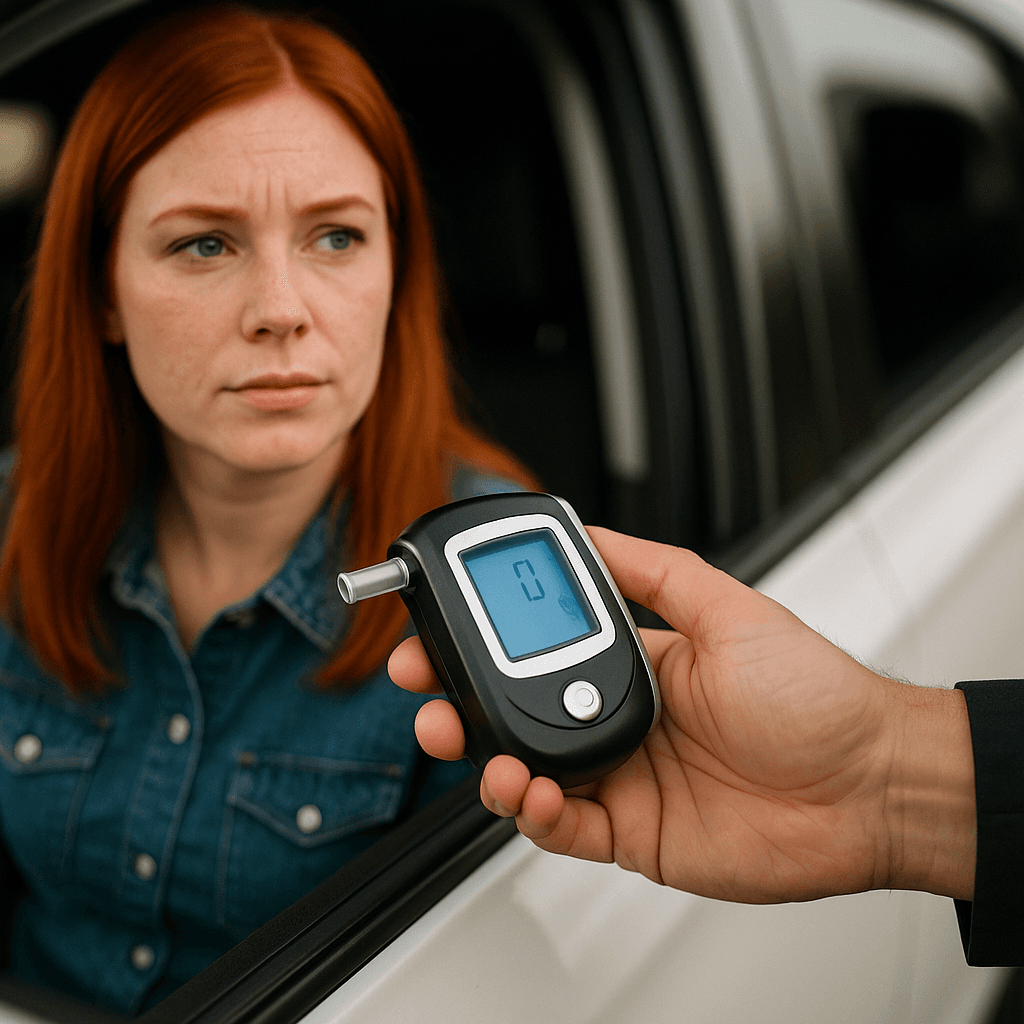
You just got your first speeding ticket and you're about to find out exactly how much more you'll pay for car insurance — and how long that increase lasts.
How Much Does a First Speeding Ticket Raise Your Rate at 18?
A first speeding ticket at age 18 typically raises your car insurance rate by 25-40% at most major carriers — but the actual dollar increase is higher than it sounds because you're starting from an already-elevated baseline. An 18-year-old already pays roughly double what a 30-year-old pays for equivalent coverage due to the inexperienced operator surcharge.
Here's the math: if you were paying $250/month before the ticket, a 30% increase brings you to $325/month — that's $900 more per year. The same violation for a 30-year-old paying $125/month would cost them $37.50/month or $450/year. You pay double the financial penalty for the same violation because carriers apply the ticket surcharge on top of your age-related rate, not separately.
The increase typically stays on your record for 3 years from the conviction date, not the ticket date. Most carriers recalculate your rate at each renewal — so if your policy renews every 6 months, you'll see the surcharge applied at your next renewal and it will remain until 36 months have passed from the day the court processed your ticket or guilty plea.
Why Your First Ticket Costs More Than Someone Older's First Ticket
Carriers don't price violations in isolation — they price them against your existing risk profile. At 18, you're already in the highest-risk pricing tier because you have limited driving history. Adding a speeding ticket moves you into an even narrower subset: high-risk young drivers with a recent violation.
Statistically, a driver under 21 with one speeding ticket is significantly more likely to file a claim in the next 12 months than a driver over 25 with one ticket. Carriers know this from decades of actuarial data, and they price accordingly. The ticket itself is proof of risky behavior, but your age multiplies the weight of that proof.
This is why some young drivers see increases above 40% — particularly if the ticket was for excessive speed (typically 15+ mph over the limit) or happened in a school zone or construction area. Those violations carry higher surcharges at every age, but the baseline you're starting from makes the total cost disproportionately higher for drivers under 21.
Compare car insurance for first-time drivers
Rates are high for new drivers — but the right carrier and discounts can make a real difference.
Get Your Free Quote✓ New Driver Specialists✓ No Obligation✓ Licensed Carriers✓ All 50 States
When the Ticket Surcharge Actually Drops Off Your Rate
Most carriers remove the violation surcharge 3 years after the conviction date, but your rate doesn't automatically drop the day that happens — it drops at your next renewal after the 3-year mark. If your ticket was processed on March 15, 2022, and your policy renews every May 1st, the surcharge will disappear on your May 1, 2025 renewal.
Some carriers offer accident forgiveness or minor violation forgiveness programs, but these are rarely available to drivers under 21, and when they are, they typically require 3-5 years of continuous coverage with that same carrier. Don't count on forgiveness — count on the calendar.
Here's the part most young drivers miss: the 3-year window is also when you should shop for new coverage, not after it drops off. Competing carriers will pull your motor vehicle record during the quote process — if your ticket is 35 months old, it still shows up and they price you accordingly. But if you wait until month 37 to shop, your record is clean and you're comparing clean-record rates across carriers. Timing your shopping correctly can save you hundreds more than staying with your current carrier and waiting for them to drop the surcharge.
Should You Stay on Your Parents' Policy After a Ticket?
If you're currently listed on a parent's policy, the ticket will still raise the overall policy premium — but it's almost always cheaper to stay on their policy and accept the increase than to get your own independent policy right after a violation. The parent's policy benefits from multi-car discounts, longevity discounts, and their own clean driving records, which offset some of the ticket's impact.
A typical scenario: the family policy was $2,400/year with you on it. Your ticket raises it to $3,000/year. Your parents might ask you to cover the $600 increase. If you leave and get your own policy as an 18-year-old with a recent speeding ticket, you'll likely pay $3,600-$4,800/year for minimum coverage on a single vehicle.
The tradeoff: staying on their policy saves money now but doesn't build your own insurance history. When you do eventually get your own policy at 21 or 25, some carriers will treat you as a new policyholder rather than someone with continuous coverage. A few carriers give credit for time spent as a listed driver on a parent's policy, but most don't. If cost is your immediate concern, stay on the family policy. If you're planning to be financially independent soon and want to start building your own rate history, the ticket makes that more expensive but not impossible.
What Happens If You Get a Second Ticket Before the First One Drops Off
Two speeding tickets within a 3-year window typically raise your rate by 50-90% total and move you into high-risk territory with most standard carriers. Some carriers will non-renew your policy outright — meaning they won't cancel you mid-term, but they'll send a notice that they won't offer renewal when your current term ends.
If you're non-renewed, you'll need to find coverage in the non-standard or assigned risk market, where rates for young drivers with multiple violations can exceed $500/month even for state minimum liability. This isn't a scare tactic — it's the actual claims data. A driver under 21 with two tickets in 24 months has a claim frequency rate roughly 4x higher than a clean driver the same age.
The second ticket also restarts the clock on the first one for some surcharge structures. If your first ticket happened 20 months ago and you get a second one today, many carriers will apply a multi-violation surcharge that doesn't start dropping until 36 months after the most recent ticket. You don't get credit for partial time served on the first violation — the presence of a second violation changes how both are priced.
How to Minimize the Damage Right Now
If the ticket hasn't been processed yet, look into your state's traffic school or defensive driving diversion programs. Many states allow first-time offenders under a certain speed threshold to complete a driver improvement course in exchange for keeping the ticket off their motor vehicle record. The court still processes it, but it doesn't report to insurance carriers.
You'll need to confirm eligibility before your court date — some states limit this option to tickets under 15 mph over the limit, and some exclude drivers under 21 entirely. If you qualify, the course fee is typically $50-$150 and the time investment is 4-8 hours online or in a classroom. Compare that to $900/year in added premiums and the math is obvious.
If the ticket is already on your record, the next step is to shop your rate with at least three carriers at your next renewal. Some carriers penalize young drivers with tickets more heavily than others — the difference between the most expensive and least expensive quote for the same coverage can be $100-$150/month. You're already paying the surcharge, but you don't have to pay the highest version of it.
Finally, if your carrier offers a telematics program (usage-based insurance that tracks your driving via an app or plug-in device), enroll. These programs reward smooth braking, low mileage, and off-peak driving — all behaviors that statistically reduce claim risk. A good telematics score can offset 10-20% of your rate, and for young drivers with a ticket already on record, that discount can partially counteract the violation surcharge. The programs are voluntary and the data is typically deleted after the monitoring period, but the discount persists as long as you maintain good scores.