Washington requires liability coverage at minimum limits most new drivers don't know about — and those state minimums might not be enough if you're financing a car or protecting assets you've just started building.
Washington's mandatory liability coverage: the actual numbers
Washington requires all drivers to carry liability insurance with minimum limits of 25/50/10. That breaks down to $25,000 for bodily injury per person, $50,000 for bodily injury per accident, and $10,000 for property damage per accident.
These numbers represent the maximum your insurance will pay if you cause an accident. If you hit someone and their medical bills reach $40,000, your policy pays $25,000 and you're personally responsible for the remaining $15,000. That's not a hypothetical scenario — emergency room visits, ambulance rides, and follow-up care regularly exceed $25,000 in serious accidents.
For new drivers specifically, these minimums matter more because you're statistically more likely to be in an accident during your first few years of driving, and you probably don't have $15,000 sitting in savings to cover the gap. The state minimum protects you from driving uninsured, but it doesn't necessarily protect your financial future.
Beyond state minimums: coverage most new drivers actually need
If you're financing or leasing a car, your lender will require collision and comprehensive coverage regardless of what Washington state mandates. Collision covers damage to your car when you hit something or roll over. Comprehensive covers theft, vandalism, weather damage, and hitting an animal. Both come with a deductible — the amount you pay out of pocket before insurance kicks in.
Uninsured motorist coverage isn't required in Washington, but approximately 13% of Washington drivers don't carry insurance according to the Insurance Research Council. If an uninsured driver hits you and causes $30,000 in medical bills, you're relying on your own coverage to pay those costs. Uninsured motorist bodily injury coverage fills that gap — and it's typically inexpensive to add.
Personal injury protection (PIP) is optional in Washington. It covers your medical bills and lost wages after an accident regardless of who's at fault. For a new driver living paycheck to paycheck or balancing student loans, PIP can mean the difference between recovering from an accident and going into debt because you missed two weeks of work.
Compare car insurance for first-time drivers
Rates are high for new drivers — but the right carrier and discounts can make a real difference.
Get Your Free Quote✓ New Driver Specialists✓ No Obligation✓ Licensed Carriers✓ All 50 States
What new drivers pay in Washington and why
Drivers under 25 in Washington typically pay 80-120% more than a 30-year-old with identical coverage. That's not a penalty for being young — it's a reflection of collision statistics. Drivers aged 18-24 are involved in accidents at roughly twice the rate of drivers aged 30-50, and insurance pricing directly reflects that actuarial reality.
Washington is one of the states that prohibits using gender as a rating factor, which means your rate is based on age, driving record, credit history (if you have one), and location — but not whether you're male or female. If you're 20 with no credit history, you'll pay 15-30% more than a 20-year-old with two years of positive credit history at most carriers.
The inexperienced operator surcharge — the premium increase specifically tied to lack of driving history — typically drops at two milestones: age 21 and age 25. Most carriers don't notify you when this happens. The right time to shop for new quotes is 30-60 days before you turn 21 or 25, because new carriers will price you at your future risk tier while your current carrier is still charging you at your current tier. insurance for drivers with points
Staying on a parent's policy vs getting your own
Staying on a parent's policy in Washington costs less per month than getting your own — often 40-60% less — but it delays the start of your independent insurance history. Every month you're listed as a driver on someone else's policy is a month that doesn't count toward your own continuous coverage record.
When you eventually get your own policy at 24 or 26, carriers treat you as a first-time policyholder even if you've been driving for eight years. That means you don't qualify for the loyalty discounts, multi-policy discounts, or preferred rate tiers that require 3-5 years of continuous coverage in your own name. The monthly savings now can translate to higher rates later that persist for years.
If you own your car, live at a different address than your parents, or are the primary driver of a vehicle, most carriers require you to have your own policy anyway. Washington insurers can refuse a claim if they discover the policy structure doesn't match the actual risk — if you're living in Seattle driving a car daily while insured as an occasional driver on your parents' policy in Spokane, that's a coverage gap.
Proof of insurance and what happens without it
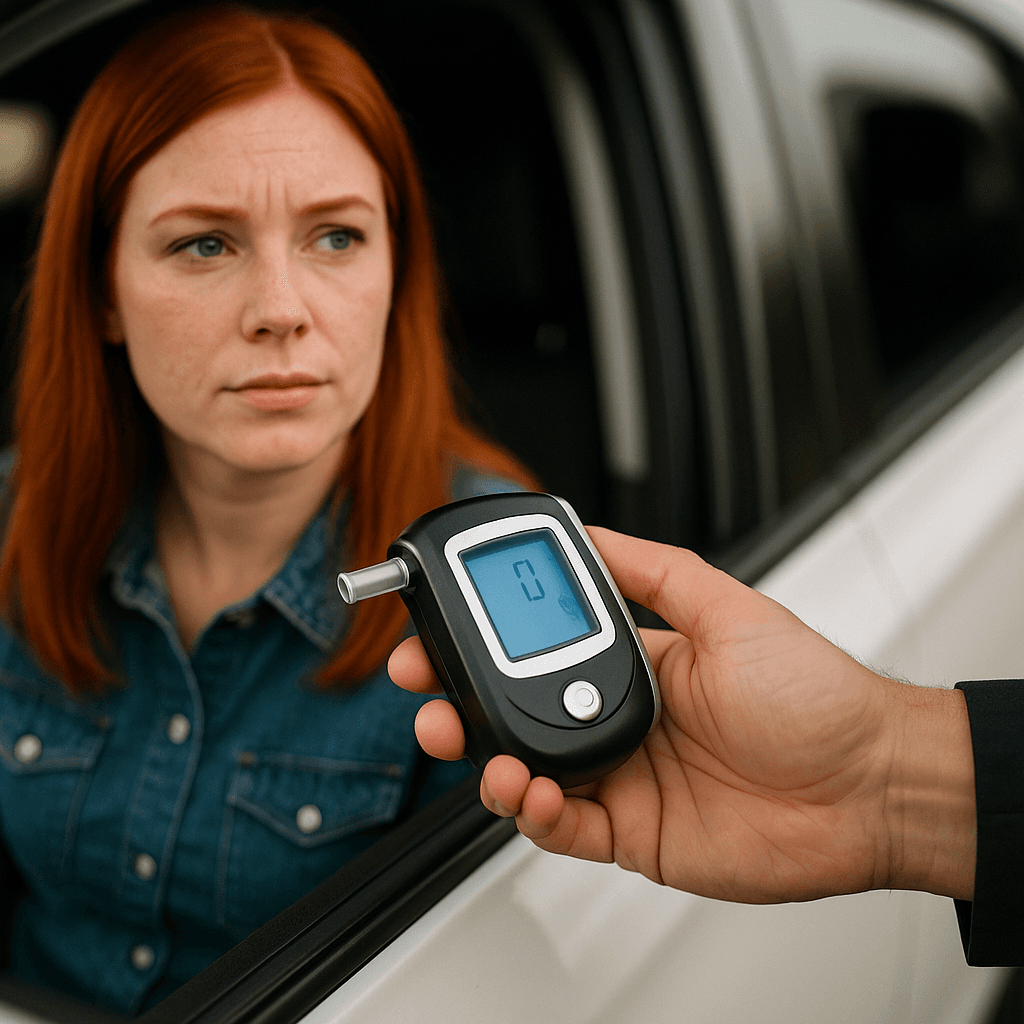
Washington requires you to carry proof of insurance whenever you're driving. That can be a paper insurance card or a digital version on your phone — both are legally valid. If you're pulled over without proof, you can be fined up to $450 even if you actually have coverage.
If you let your insurance lapse — even for a single day — Washington requires you to surrender your license plates and vehicle registration. Getting caught driving without insurance results in a minimum $450 fine for a first offense, potential license suspension, and SR-22 filing requirements that increase your insurance costs by 30-50% for three years.
For new drivers, a lapse also resets your insurance history. Carriers view a gap in coverage as high-risk behavior. If you had six months of clean coverage, let it lapse for two weeks because you were between jobs, then got a new policy, most carriers will price you as a brand-new driver rather than someone with six months of history. The cost of that lapse compounds over the next 3-5 years.
Discounts and programs that actually matter for young drivers
The good student discount — typically 5-25% off your premium — requires proof of a 3.0 GPA or higher. Most carriers require you to resubmit transcripts or a grade report every six months. If you qualified in January but don't send updated proof in July, the discount disappears and your rate increases mid-policy.
Telematics programs track your driving through a smartphone app or plug-in device. They measure hard braking, rapid acceleration, mileage, and time of day you drive. For new drivers who drive fewer than 7,500 miles per year and avoid late-night driving, telematics discounts can reach 20-30%. The data typically works in favor of young drivers more than older drivers because the behaviors being measured — smooth braking, lower mileage, daytime driving — align with how many 20-year-olds actually drive when they're commuting to school or work.
Paying your premium in full rather than monthly installments saves you the installment fee — typically $5-10 per month. Over a six-month policy, that's $30-60. If you can afford the upfront cost, it's one of the few guaranteed discounts that requires no ongoing proof or behavior change.
When to shop and how rates change over time
Your rate will drop significantly at three predictable milestones: age 21, age 25, and three years of claim-free driving. The largest single drop typically happens at 25, when the inexperienced operator surcharge falls off entirely at most carriers. A 24-year-old paying $180/month might see that drop to $110/month at 25 with no other changes.
Shopping 30-60 days before you turn 21 or 25 lets you lock in the lower rate before your birthday. If you wait until after your birthday, your current carrier will eventually adjust your rate at your next renewal — but a new carrier can offer you the post-birthday rate immediately. That timing gap can save you 2-4 months of the higher premium.
After your first year of continuous coverage, shop your rate every six months. New driver rates are volatile — one carrier might price you at $165/month when you're 20 with six months of history, then another carrier offers $135/month when you're 21 with 18 months of history. Loyalty doesn't reduce your premium as a young driver. Shopping does.