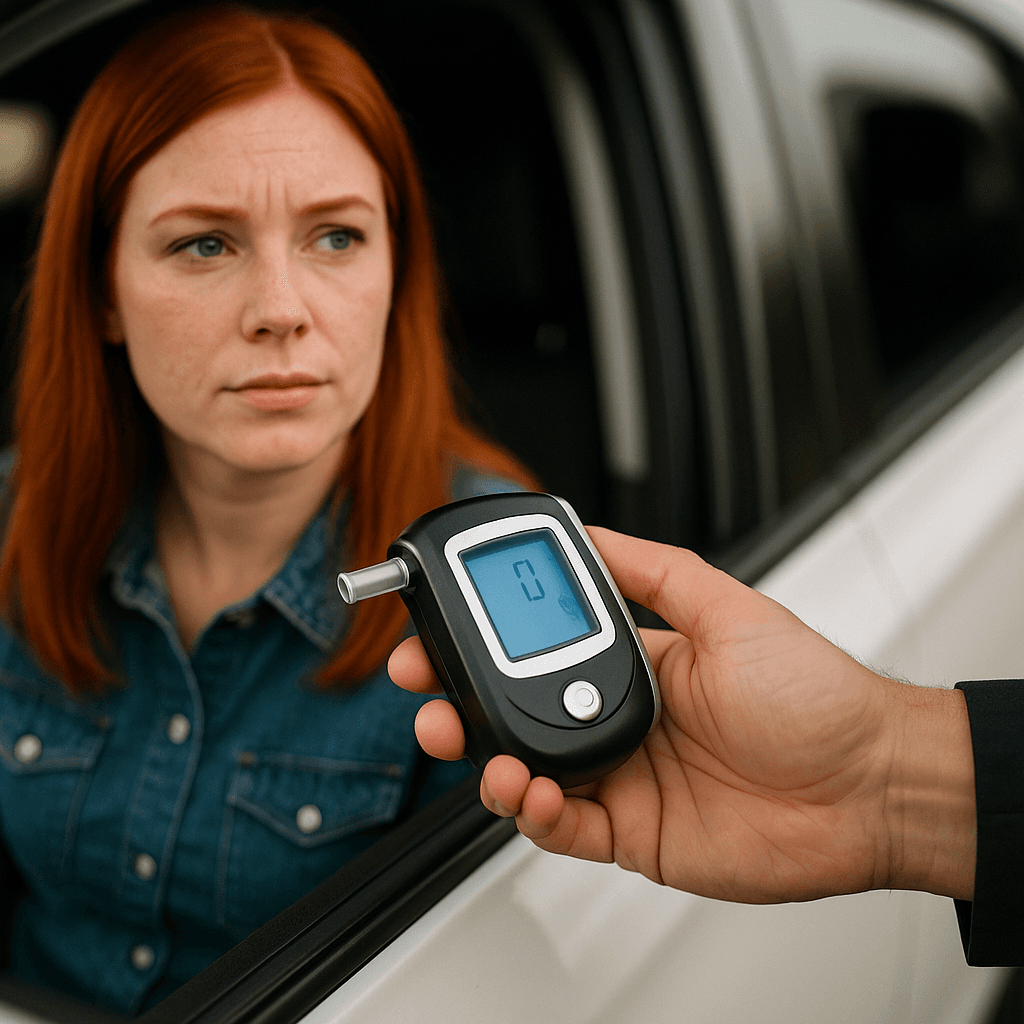
Indiana requires three specific liability coverages and sets dollar minimums most carriers won't explain clearly. Here's what you're legally required to carry, what those numbers actually mean for your first policy, and what happens if you drive without them.
What Indiana actually requires on your first policy
Indiana law requires you to carry liability insurance with three minimum coverage amounts: $25,000 bodily injury per person, $50,000 bodily injury per accident, and $25,000 property damage. You'll see this written as 25/50/25 on quotes. These aren't three different policies — they're three limits within one liability coverage that applies when you cause an accident.
Here's how the three numbers work together. If you cause an accident that injures two people, the per-person limit ($25,000) caps what your insurance pays to each injured person. The per-accident limit ($50,000) caps the total your insurance pays to all injured people combined in that one accident. The property damage limit ($25,000) covers the other driver's car and anything else you damage — fences, mailboxes, guardrails — but it's a separate bucket that doesn't share with the bodily injury limits.
Most carriers will try to sell you higher limits immediately, and they're not wrong to suggest it. A single emergency room visit after a moderate accident often exceeds $25,000. If you cause an accident that injures someone badly enough to require surgery or ongoing treatment, you're personally responsible for every dollar above your policy limit. That's not a scare tactic — it's the actual legal structure of how liability coverage works.
Why state minimums create more risk for drivers under 25
State minimum coverage costs less per month, but it transfers more financial risk to you personally — and that matters more when you're 22 than when you're 45. Drivers under 25 are statistically more likely to cause accidents that exceed minimum policy limits, which means you're more likely to face a lawsuit for the difference.
Here's the math that matters. If you carry Indiana's 25/50/25 minimums and cause an accident that injures one person with $60,000 in medical bills, your insurance pays the first $25,000. You're personally liable for the remaining $35,000. If you don't have $35,000 in assets, the injured party can pursue wage garnishment, which in Indiana can claim up to 25% of your disposable earnings until the debt is satisfied. That's not theoretical — it's how liability judgments actually get collected.
Carriers know this risk profile, which is why many won't quote minimums to drivers under 25 without adding underinsured motorist coverage or requiring higher limits as a condition of coverage. Some carriers simply won't write minimum-limit policies for drivers under 21. If you're shopping and seeing quotes that require 50/100/50 or 100/300/100 limits, that's the carrier managing their own risk by requiring you to carry enough coverage to avoid most personal liability scenarios.
Compare car insurance for first-time drivers
Rates are high for new drivers — but the right carrier and discounts can make a real difference.
Get Your Free Quote✓ New Driver Specialists✓ No Obligation✓ Licensed Carriers✓ All 50 States
The three coverages Indiana doesn't require but carriers often do
Indiana doesn't require uninsured motorist coverage, comprehensive coverage, or collision coverage by law — but your lender does if you financed or leased your car. If you took out a car loan, your loan agreement almost certainly includes a clause requiring you to carry both comprehensive and collision with a deductible no higher than $1,000. If you lease, the lessor typically requires the same plus gap insurance.
Uninsured motorist coverage is optional under Indiana law, but approximately 15% of Indiana drivers don't carry insurance despite the legal requirement. If an uninsured driver hits you and causes $30,000 in medical bills and car damage, their lack of insurance doesn't erase your costs. Uninsured motorist coverage fills that gap — it pays for your injuries and property damage as if the at-fault driver had carried proper insurance. Many carriers include this automatically on first-time driver policies because the risk-to-cost ratio favors it heavily for young drivers.
Collision and comprehensive work differently than liability. Collision covers damage to your car when you cause an accident or hit an object. Comprehensive covers damage from everything else — theft, vandalism, hail, hitting a deer. Both require you to pay a deductible before the insurance kicks in. If your car is worth $4,000 and you're paying $120/month for full coverage with a $500 deductible, you're paying $1,440/year to insure a depreciating asset. That math works if you can't afford to replace the car out of pocket. It doesn't work if the car is worth less than two years of premiums.
How required coverage affects your rate at different ages
Indiana's minimum required coverage costs dramatically less than higher limits, but the rate difference compresses as you age. A 19-year-old driver in Indianapolis typically pays $180–$280/month for state minimum 25/50/25 liability. The same driver with 100/300/100 limits pays approximately $240–$350/month. That's a $60–$90 monthly difference for coverage that reduces personal liability exposure by $75,000 per person.
By age 25, that same coverage comparison typically shows a $30–$50 monthly difference, assuming a clean driving record. The liability limits cost almost the same to increase, but the base rate drops significantly because the inexperienced operator surcharge falls off. This creates a timing consideration most first-time drivers miss: if you're currently 23 with a clean record and you're planning to shop for coverage when you turn 25, increasing your liability limits now builds a better insurance history and positions you for deeper discounts when that age-based rate drop hits.
The other rate factor that matters for required coverage is your claims history. If you carry minimum limits and cause an at-fault accident, your rate increase at renewal is typically 30–60% regardless of whether your liability limit was $25,000 or $100,000. But if that accident generated a liability claim that exceeded your policy limit and you were sued for the difference, that civil judgment appears on your driving record and compounds the rate increase. Some carriers will non-renew you entirely. Carrying higher limits doesn't prevent the accident, but it prevents the secondary financial event that turns one mistake into a three-year rate penalty.
What happens if you drive without required coverage in Indiana
Indiana suspends your license and registration if you're caught driving without insurance, and the penalties compound quickly. The first offense typically results in a license suspension lasting until you file proof of insurance, plus a $250 reinstatement fee. A second offense within five years increases the fee to $500 and adds a mandatory SR-22 filing requirement for three years.
An SR-22 isn't a type of insurance — it's a certificate your insurance carrier files with the Indiana Bureau of Motor Vehicles certifying you carry at least minimum required coverage. Carriers charge $15–$50 to file it, but the real cost is the rate increase. Most carriers classify SR-22 drivers as high-risk, which typically adds 30–80% to your premium. If your carrier won't file an SR-22, you'll need to find a specialist high-risk carrier, and those policies typically cost 2–3 times what a standard policy costs.
The license suspension creates a secondary problem most first-time drivers don't anticipate: a coverage lapse. If your insurance lapses for any reason — missed payment, non-renewal, cancellation for non-payment — and that lapse exceeds 30 days, most carriers apply a lapse surcharge at your next policy. That surcharge typically runs 20–40% and lasts for three years. If you let your license suspend for 90 days before reinstating and getting coverage, you're paying both the SR-22 high-risk rate and the lapse surcharge simultaneously. That combination can push a $200/month policy to $500/month for three full years.
How to meet requirements and build toward better rates
If you're buying your first independent policy in Indiana, start with liability limits higher than the state minimum unless your car is worth less than $3,000 and you have no assets to protect. A 50/100/50 policy costs $40–$70 more per month than 25/50/25 for most first-time drivers, and that difference buys you significantly better protection against personal liability and positions you in a lower-risk pricing tier when you shop at your next renewal.
If cost is the primary barrier, ask your carrier about usage-based or telematics programs before you drop coverage to minimums. Programs like Snapshot, DriveEasy, or Milewise typically offer 5–30% discounts for young drivers who drive fewer than 8,000 miles annually, avoid hard braking, and drive outside peak accident hours. A 20-year-old who drives 6,000 miles per year and works a night shift often qualifies for deeper telematics discounts than a 35-year-old commuter driving 15,000 miles in rush hour traffic.
Set a calendar reminder to shop for new quotes 60 days before you turn 25 if you're currently under 25, and 60 days before your three-year clean record anniversary if you've avoided tickets and accidents. These are the two most significant rate-drop milestones for first-time drivers, and shopping before they hit lets you lock in the lower rate when the milestone arrives. Most carriers use your age and driving record on the policy effective date, not the quote date, so getting a quote at 24 years and 10 months that starts the day you turn 25 prices you at 25, not 24.