Arizona requires liability coverage at specific minimums, but those state minimums leave you personally exposed if you cause a serious accident. Here's what the law requires, what that actually covers, and where the required coverage falls short for drivers building their first policy.
What Arizona law actually requires you to carry
Arizona requires all drivers to carry liability insurance with minimum limits of 25/50/15. That breaks down as $25,000 for bodily injury per person, $50,000 for bodily injury per accident, and $15,000 for property damage per accident. These are the legal minimums — the least amount of coverage you can carry and still register a car or drive legally in the state.
Liability coverage pays for damage you cause to other people and their property. If you're at fault in an accident, your liability coverage pays for the other driver's medical bills, their car repairs, and any property you damaged. It does not pay for your own injuries or your own car — that's what collision and comprehensive coverage handle, and neither of those is required by Arizona law.
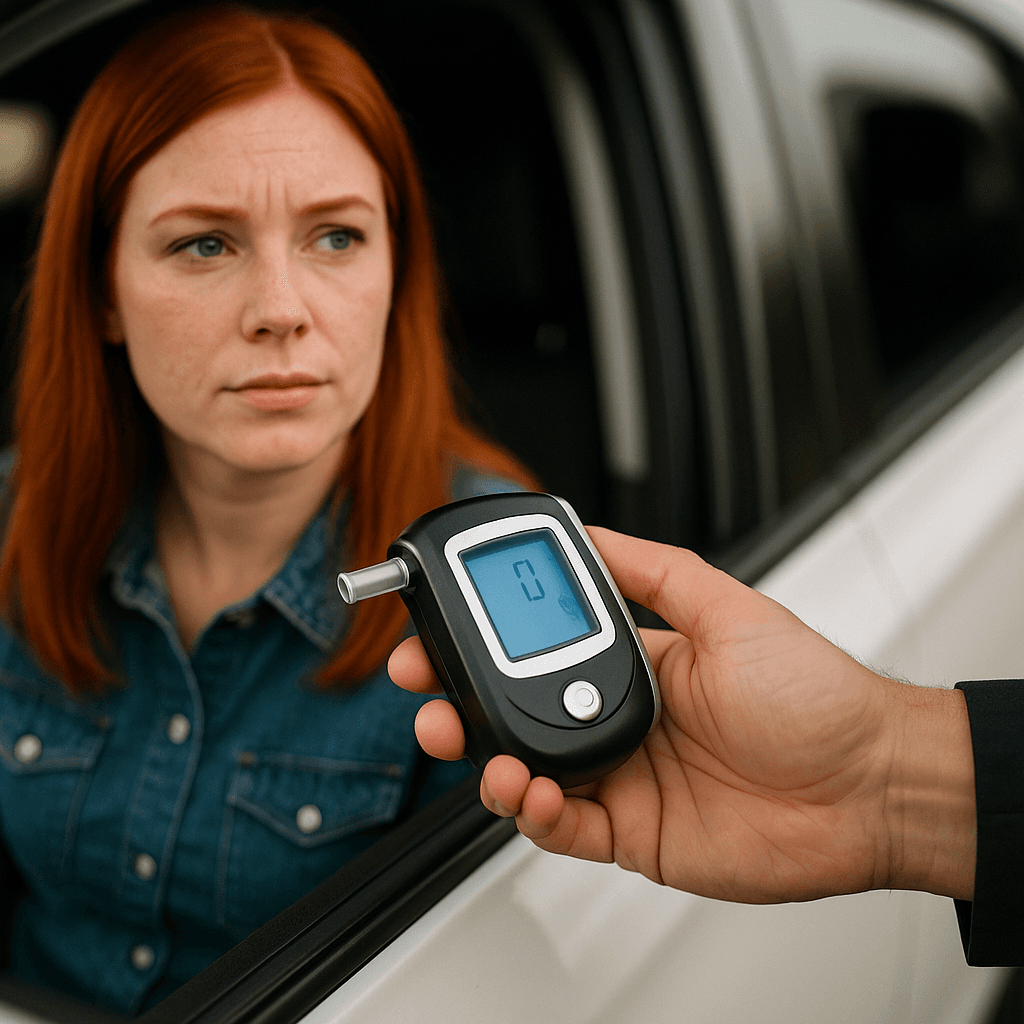
You must provide proof of insurance when you register your vehicle, renew your registration, or if you're pulled over by law enforcement. Arizona uses an electronic insurance verification system, so your insurer reports your coverage status directly to the state. If your policy lapses or cancels, the state knows within days, and you'll receive a notice requiring you to either reinstate coverage or surrender your license plates.
The penalty for driving uninsured in Arizona includes a suspension of your driver's license and vehicle registration for up to one year, plus a reinstatement fee of $50 and a requirement to file SR-22 proof of insurance for three years. For a first-time driver, an SR-22 filing typically increases your premium by 30-60% on top of already-high young driver rates.
Why the state minimum doesn't cover what you think it does
The 25/50/15 minimum exists to ensure you can pay something if you cause an accident — not to fully cover the damage you might cause. A single emergency room visit after a moderate injury can exceed $25,000. Repairing or replacing a newer vehicle can easily surpass $15,000. If you cause an accident that injures two people seriously enough to require hospitalization, you could hit your $50,000 per-accident limit in hours.
Once your liability limit is exhausted, you're personally responsible for the remaining costs. If you cause $80,000 in injuries and property damage with a 25/50/15 policy, your insurer pays the first $50,000 in bodily injury and $15,000 in property damage — and you owe the remaining $15,000 out of pocket. For most drivers under 25, that's not a bill you can absorb without serious financial consequences.
Arizona is an at-fault state, which means the driver who caused the accident is financially responsible for the damage. If you're found at fault and your coverage is insufficient, the other driver can sue you directly for the difference. That judgment can follow you for years, affect your ability to get credit, and result in wage garnishment. The state minimum protects you from a ticket — it doesn't protect you from financial liability.
Compare car insurance for first-time drivers
Rates are high for new drivers — but the right carrier and discounts can make a real difference.
Get Your Free Quote✓ New Driver Specialists✓ No Obligation✓ Licensed Carriers✓ All 50 States
Coverage beyond the minimum: what matters for first-time drivers
Most insurance professionals recommend carrying liability limits of at least 100/300/100 — particularly for young drivers who statistically have higher accident rates during their first few years of independent driving. The cost difference between minimum coverage and 100/300/100 is typically $20-40 per month, and that marginal cost buys you substantially more protection if you're at fault in a serious accident.
Uninsured motorist coverage is not required in Arizona, but approximately 12-15% of Arizona drivers are uninsured according to recent estimates. If an uninsured driver hits you and you don't carry uninsured motorist coverage, you're responsible for your own medical bills and car repairs even though you weren't at fault. For a first-time driver with limited savings, that's a scenario worth insuring against. Uninsured motorist coverage typically costs $10-25 per month and mirrors your liability limits.
Collision and comprehensive coverage are optional unless you finance or lease your vehicle — in which case your lender will require both. Collision covers damage to your car from an accident regardless of fault. Comprehensive covers non-collision damage like theft, vandalism, hail, or hitting an animal. If you own an older car outright worth less than $3,000-4,000, paying for collision coverage often doesn't make financial sense because your deductible plus a few months of premiums can exceed the car's value. If your car is worth $8,000 or more, or if losing it would leave you unable to get to work or school, collision and comprehensive become worth the cost.
How Arizona enforces insurance requirements and what happens if you lapse
Arizona's electronic insurance verification system monitors your coverage status continuously. When you buy a policy, your insurer reports it to the Arizona Department of Transportation. If your policy cancels or lapses for any reason — non-payment, voluntary cancellation, or insurer cancellation — the state receives that report within 10 days.
Once the state flags your registration as uninsured, you receive a notice requiring you to either provide proof of coverage or surrender your vehicle registration and license plates within 15 days. If you don't respond, your registration and driver's license are suspended. Driving on a suspended license is a Class 1 misdemeanor in Arizona, which can result in fines up to $2,500, up to six months in jail, and mandatory SR-22 filing for three years once you reinstate.
For first-time drivers, a lapse is particularly expensive because it resets your insurance history. Continuous coverage is one of the few factors that works in your favor when insurers price your policy. A gap of 30 days or more signals higher risk, and most carriers will surcharge your rate by 20-40% when you reapply. If you're switching carriers or letting a policy lapse intentionally, make sure your new policy starts the same day your old one ends — even a single day without coverage triggers the enforcement process.
Reinstating after a suspension requires paying a $50 reinstatement fee, filing SR-22 proof of insurance, and maintaining that SR-22 for three years. SR-22 isn't a type of insurance — it's a certificate your insurer files with the state confirming you carry at least the minimum required coverage. Insurers charge $15-25 to file it initially, and because it identifies you as high-risk, your premium typically increases by 30-60% for the entire three-year filing period.
What first-time drivers in Arizona actually pay for required coverage
Young drivers in Arizona typically pay $180-280 per month for state minimum liability coverage, compared to $80-120 per month for a 30-year-old with the same coverage and driving record. That difference reflects statistical accident rates — drivers under 25 are involved in crashes at roughly twice the rate of drivers over 30, and insurers price that risk accordingly.
If you carry higher liability limits like 100/300/100 plus uninsured motorist coverage, expect to pay $220-350 per month as a first-time driver. Adding collision and comprehensive for a financed vehicle pushes the total to $280-450 per month depending on the car's value, your deductible, and your specific insurer. Those ranges assume a clean driving record — a single at-fault accident or moving violation can increase your premium by 30-50% at most carriers.
Your rate drops at specific milestones that most carriers don't advertise: turning 21 typically reduces your premium by 10-15%, and turning 25 drops it another 15-20% if you maintain a clean record. The timing of those reductions matters. Shop for new quotes 30-60 days before you turn 21 or 25, not after — new carriers price your future risk based on your age at the policy start date, while your current carrier may delay applying the age-based discount until your policy renews.
Staying on a parent's policy costs less per month than buying your own — typically $100-180 added to their premium versus $180-280 for an independent policy. But staying on a parent's policy doesn't build your own insurance history. When you eventually move to your own policy at 25, insurers still price you as a first-time policyholder because you have no history of maintaining independent coverage. If you can afford the higher cost now, establishing your own policy at 21-23 positions you for better rates by 25.
Filing proof of insurance and maintaining compliance
When you register a vehicle in Arizona, you provide your insurance policy number and insurer information directly on the registration application. The Motor Vehicle Division verifies your coverage electronically before issuing your registration. You don't submit a physical insurance card during registration, but you must carry proof of insurance in your vehicle at all times — either a physical card from your insurer or a digital proof on your phone.
If you're pulled over and cannot provide proof of insurance, you can be cited even if you actually have coverage. The citation is typically dismissed if you provide proof to the court within 20 days, but you'll still pay court fees of $25-50. Keep a current insurance card in your glove box and a digital copy saved offline on your phone — relying on a website or app to pull up proof creates problems if you don't have signal or your phone is dead.
Switching insurers mid-policy is common and doesn't create a compliance issue as long as there's no gap in coverage. When you cancel your old policy, make sure your new policy is already active — ideally starting the same day or the day before your old policy ends. Most insurers allow you to set a future effective date when you buy a policy, which makes the transition seamless. If you cancel your old policy before your new one starts, even for 24 hours, the state flags you as uninsured.